Light Colour & Kelvin: The Complete Guide to Choosing the Right Light Colour

Whether it's an office, a workshop or a living room – the light colour of an LED luminaire determines whether a space feels inviting or sterile, whether employees concentrate or fatigue, whether details are clearly visible or lost in a haze. Anyone planning a lighting installation cannot avoid one key concept: Kelvin (K).
This guide explains in plain language what light colour means, which Kelvin values exist and – above all – which light colour is the right choice for each application.
What Is Light Colour? The Kelvin Scale Explained Simply
The light colour (also known as colour temperature) describes the colour impression produced by a light source. It is measured in Kelvin (K) and indicates how warm or cool the light appears to the eye.
This may seem counterintuitive at first: the higher the Kelvin value, the cooler and more bluish-white the light appears – and vice versa. Candlelight sits at around 1,800 K, while direct midday sunlight is approximately 5,500–6,000 K.
The rule of thumb:
- 2,700 K – 3,000 K = Warm white (cosy, yellowish-warm)
- 3,500 K – 4,000 K = Neutral white (natural, balanced)
- 5,000 K – 6,500 K = Daylight white (crisp, bluish-cool)
The Kelvin value says nothing about brightness – that is determined by the lumen value. Light colour and brightness are two entirely independent parameters.
Light Colour Table: From Warm White to Daylight White
The table below gives you a quick overview of all relevant Kelvin values and their typical applications:
| Kelvin Value | Designation | Colour Tone | Typical Application |
|---|---|---|---|
| 2,700 K | Extra Warm White | Very warm, yellowish-orange | Living rooms, hotels, restaurants |
| 3,000 K | Warm White | Warm, slightly yellowish | Residential areas, reception and lobby areas, retail |
| 3,500 K | Warm Neutral | Transition range | Kitchens, corridors, showrooms |
| 4,000 K | Neutral White | Natural white light | Offices, medical practices, workshops, schools |
| 5,700 K | Daylight White | Bright, slightly bluish | Industry, warehouses, high-demand work areas |
| 6,000 K | Daylight White | Cool, bluish-white | Outdoor lighting, cleanrooms, inspection areas |
| 6,500 K | Cool White | Very cool, blue-white | Specialist applications, medical lighting |
3000K Light Colour: Warm White Comfort
The 3000K light colour is the most popular choice for areas where relaxation and wellbeing take priority. The light feels inviting and naturally warm – comparable to the glow of a classic incandescent bulb, but far more energy-efficient.
In B2B contexts, 3000K is an excellent choice for reception areas, showrooms, restaurants and hotels, where a pleasant ambience matters more than maximum visual acuity.
4000K Light Colour: Neutral White for Focused Work
4000K is the standard for working environments. The neutral white light feels alert and clear without the coldness of daylight lamps. It promotes concentration and ensures that colours are rendered naturally.
Offices, medical practices, laboratories and schools benefit particularly from 4000K – it is the ideal compromise between efficiency and comfort.
6000K Light Colour: Daylight White for the Highest Demands
At 6000K, a crisp, bluish-white light dominates. It closely resembles midday daylight and is particularly suited to environments where fine details must be clearly visible: warehouses, quality control, precision workshops and outdoor areas.
Which Light Colour for Which Room? The Application Overview
Office and Workplace – 4000K Neutral White Recommended
In the office, concentration is paramount. 4000K neutral white keeps employees alert, reduces eye fatigue and creates a pleasant working atmosphere without clinical coldness.
For conference rooms that are also used for presentations, DALI-dimmable LED panels are recommended, allowing light colour and brightness to be adjusted flexibly – from a focused daylight ambience to a more relaxed 3000K atmosphere for informal meetings.
Workshop and Industry – 4000K to 6000K
In workshops and industrial environments, high visual acuity is essential. Depending on the task:
- 4000K: General lighting, assembly areas
- 5,700K–6,000K: Quality control, precision mechanics, inspection areas
Particularly important here is the CRI/Ra value (more on this below), as true-to-life colour rendering is indispensable for inspection and control tasks.
Living Room and Relaxation Areas – 2700K to 3000K
In residential settings, the rule is: the warmer, the better. 2,700K to 3,000K warm white creates a cosy, relaxed atmosphere. For commercial residential spaces such as hotel rooms, wellness areas or lounges, 3000K is the standard.
With CCT-adjustable luminaires, the light colour can also be adapted dynamically – ideal for rooms with varying usage scenarios.
Kitchen and Hospitality – 3000K or 4000K
In the kitchen, two aspects are key: food should look appetising (an argument for 3000K warm white) and work areas should be well illuminated (an argument for 4000K neutral white).
The solution: 3000K for general lighting in the dining area or restaurant floor, 4000K for task lighting above chopping boards, hobs and work surfaces in professional kitchens.
Bathroom – 3000K to 4000K
In the bathroom, clear visibility combined with a pleasant atmosphere is key. 3,500K to 4,000K is the recommended range. For mirror luminaires where make-up or grooming precision is required, a high CRI value (Ra90 or Ra95) is strongly advisable.
Outdoor and Façade Lighting – 4000K to 6000K
Outdoors, practical requirements dominate: good visibility, safety and weather resistance. 4000K to 6000K is suitable for car park lighting, driveways, façades and security lighting. The crisp, bright light acts as a deterrent and ensures a safe environment.
DALI-Dimmable Light Colour: Flexibility in Lighting Design
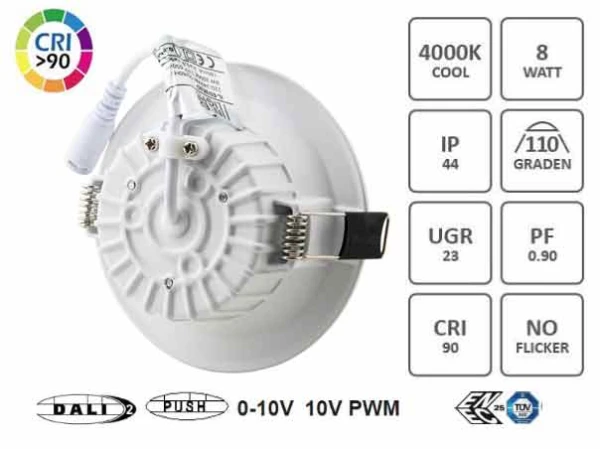
For professional lighting designs – in offices, hotels, commercial properties and public buildings – a fixed light colour is no longer state of the art. DALI (Digital Addressable Lighting Interface) enables precise digital control of both light colour and brightness.
With DALI-dimmable luminaires you can:
- Programme lighting scenes that automatically adapt to the time of day or usage context
- Control individual luminaires or groups independently – without complex rewiring
- Regulate dimming levels with pinpoint accuracy, free from flickering or colour shifts
Cologne-led.de offers a wide selection of LED recessed luminaires with DALI control as well as the complete range of DALI lamps and DALI luminaires for professional installations.
A typical real-world example: An office building with DALI control can automatically switch to 4000K in the morning (energising and activating) and to 3500K in the afternoon (relaxing, reducing fatigue) – fully automatically, without any manual intervention.
Adjustable Light Colour (CCT-Tunable): One Luminaire, Many Light Colours
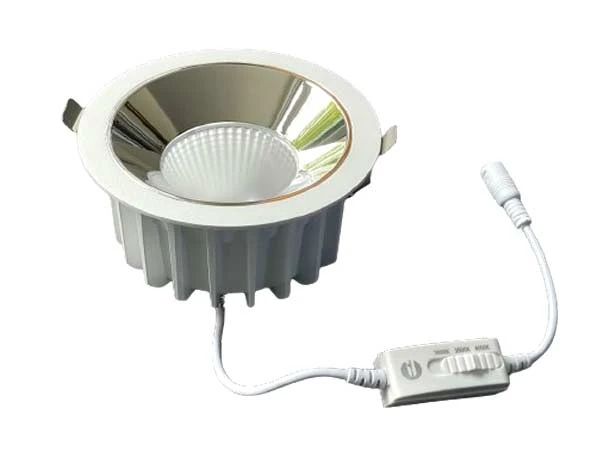
A particularly practical solution for applications with changing requirements is the CCT-tunable LED (Correlated Colour Temperature, adjustable colour temperature). With a single luminaire, you cover multiple Kelvin ranges.
Cologne-led.de offers adjustable luminaires in several Kelvin combinations:
- 3000K, 3500K or 4000K adjustable – ideal for offices, conference rooms and retail
- 3000K, 4000K or 5700K adjustable – for commercial spaces with variable requirements
- 3000K, 4000K or 6000K adjustable – for outdoor applications or industry
Switching is typically done via a switch, dimmer or controller – without replacing the luminaire. This reduces storage costs, simplifies planning and provides maximum flexibility during commissioning.
When does CCT-tunable pay off?
- When different users or shifts have different light preferences
- In multi-purpose rooms (e.g. a seminar room by day, event venue by night)
- When you prefer a uniform luminaire type across different areas
- In renovation projects where the final use of a space has not yet been determined
Three examples from our range:


CRI/Ra: Why Colour Rendering Is Just as Important as Light Colour
Light colour alone says nothing about how true to life colours appear under that light. That is where the CRI (Colour Rendering Index) – or in metric terms, the Ra value – comes in.
The Ra value is measured on a scale from 0 to 100, where 100 corresponds to the daylight standard:
| Ra Value | Rating | Typical Application |
|---|---|---|
| Ra < 70 | Insufficient | Industry, warehouses (no colour differentiation required) |
| Ra 70–79 | Acceptable | General office and commercial lighting |
| Ra 80–89 | Good | Standard for offices, schools, medical practices |
| Ra 90–94 | Very good | Retail, exhibitions, inspection areas |
| Ra ≥ 95 | Excellent | Print shops, colour inspection, medicine, cosmetics |
The combination of light colour and CRI is decisive. A 4000K luminaire with Ra80 and a 4000K luminaire with Ra95 both produce neutral white light – but under the Ra95 luminaire, colours appear significantly more natural and vibrant.
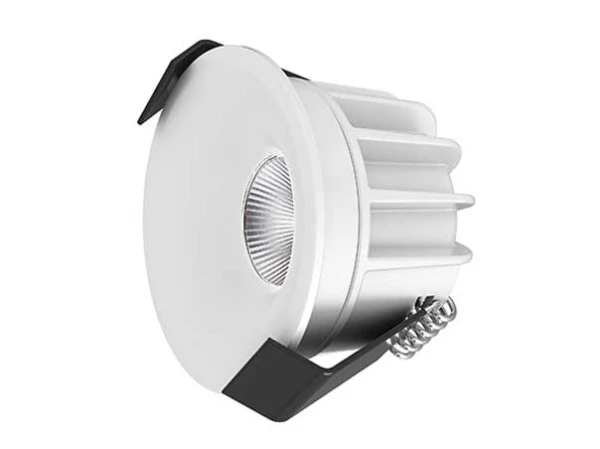
Cologne-led.de stocks specialist high-quality ranges for demanding applications:
- LED Panels with CRI90 / Ra90 – optimal colour rendering for offices and conference rooms
- CRI95 luminaires – for applications where perfect colour fidelity is non-negotiable
Practical tip: In retail, the combination of warm white light (3000K) and high CRI (Ra90+) can help products appear more attractive and positively influence purchasing decisions – an often underestimated commercial factor.
FAQ: Frequently Asked Questions About Light Colour
Which light colour is best for an office?
For offices, 4000K neutral white is recommended. This light feels natural and promotes concentration without the clinical coldness of daylight white. For screen-based workstations, the luminaire should also be glare-free and flicker-free.
What is the difference between 3000K and 4000K?
3000K appears warm and yellowish – similar to a classic incandescent bulb. 4000K looks neutral white and cooler. In practice: 3000K for relaxation areas and reception zones, 4000K for work areas where attention and concentration are required.
Can I mix luminaires with different Kelvin values?
In principle yes – but it is advisable to use consistent Kelvin values within a room or field of view. Strongly differing light colours (e.g. 3000K and 6000K side by side) create a restless, unnatural impression. With CCT-tunable luminaires from cologne-led.de, you avoid this problem elegantly.
What do warm white, neutral white and daylight white mean?
- Warm white: 2,700 K – 3,300 K (cosy, yellowish-warm)
- Neutral white: 3,300 K – 5,300 K (balanced, naturally white)
- Daylight white: from 5,300 K (cool, bluish-white)
These designations are standardised under DIN EN 12464 and indicated on all product labels.
Which light colour is suitable for a workshop or warehouse?
For workshops and warehouses, 4000K to 6000K is recommended. The more precise the visual task (e.g. quality control, precision mechanics), the higher the Kelvin and CRI values should be. For warehouses without special visual requirements, 4000K with Ra80 is fully sufficient.
What is CCT and what does adjustable light colour mean?
CCT stands for Correlated Colour Temperature, i.e. the colour temperature in Kelvin. Luminaires with an adjustable light colour (CCT-tunable) allow switching between several Kelvin values – for example between 3000K, 4000K and 5700K. This is particularly practical for multi-purpose rooms or when different users have different light preferences.
Which is better: 3000K or 4000K for retail?
It depends on the product category. For food, fashion and home furnishings, 3000K is recommended – the warm light makes products look inviting and premium. For electronics stores, tools or automotive parts, 4000K is more suitable, as colour accuracy and detail recognition matter more than a cosy ambience.
Conclusion: The Right Light Colour Makes All the Difference
Choosing the right light colour is not a minor aesthetic detail – it influences wellbeing, productivity, colour perception and ultimately the way rooms and products are experienced.
The rule of thumb:
- Warm white (3000K) = Atmosphere and relaxation
- Neutral white (4000K) = Work and concentration
- Daylight white (6000K) = Precision and outdoor use
With the right LED luminaires from cologne-led.de, the choice is yours – whether a fixed light colour for clear requirements or flexibly adjustable light colour for multi-purpose applications.
Explore our products:
- LED recessed luminaires with DALI control – for professional, dimmable installations
- DALI lamps and DALI luminaires – the complete DALI range
- LED Panels Ra90 – optimal colour rendering
- CRI95 luminaires – excellent colour fidelity for the most demanding applications
- Luminaires with adjustable light colour – one product, multiple Kelvin options
Do you have questions about lighting design or need support choosing the right light colour for your project? Our team is happy to advise you.