150W LED Hallenbeleuchtung


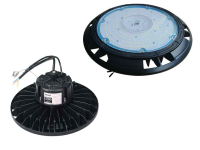
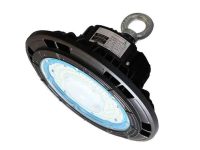
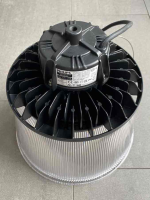
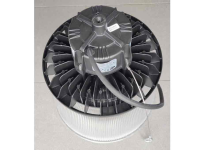
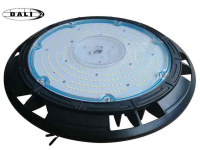
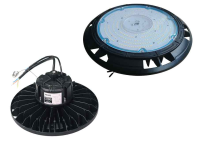
150-watt LED high bays
The most common choice wherever people work in the hall. This class suits production, workshops and warehouses with order picking, with ceilings of about 4 to 8 metres. Above that, a 90 to 120-degree beam brings too little light down to the floor, so the 200-watt class or a narrow-beam high bay is the better option.
- Ceiling height
- about 4 to 8 m
- Luminous flux
- 21,000 to 30,000 lm
- Replaces
- 400 W mercury vapour or metal halide, or older LED of about 250 W
- Typical use
- production, workshops, order picking
When it pays to replace
Not everyone who calls us still has old discharge lamps on the ceiling. Just as often, it's LED high bays that simply aren't doing their job any more.
LED high bays from 2012 to 2016
The first generation of LED high bays now has ten years of continuous operation behind it. The first fittings are starting to fail, and every failure leaves a dark patch in the hall.
Older LED that still works
The lights still work but have grown dimmer over the years. They manage 100 to 120 lumens per watt. New high bays with 200 lm/W bring back full light output and use around 40 per cent less power as well.
Cheap high bays that fail early
Budget high bays bought online often can't cope with 8 to 10 hours of operation a day. We regularly see them fail after about six months, and the driver is usually to blame.
Mercury vapour and metal halide
A 400-watt fitting draws around 450 watts including its ballast. A 150-watt LED high bay replaces it on a third of that. With 20 fittings running 10 hours a day, 5 days a week, at 17.2 cents per kWh, that comes to about 2,580 euros a year.
To see what the switch would save in your hall and how quickly it pays for itself, use the payback calculator in our guide to LED high bay lighting with your own figures.
How much light you get from 150 watts
| Efficacy | Luminous flux at 150 W | Typical of |
|---|---|---|
| 110 lm/W | 16,500 lm | older LED, around 2012 to 2016 |
| 140 to 185 lm/W | 21,000 to 28,000 lm | today's market average |
| 200 lm/W | 30,000 lm | efficient current models |
Running 10 hours a day on 250 days, each of these fittings uses 375 kWh a year. The only difference is how much light you get for it. Many models can be switched to lower settings on the housing, such as 90 or 120 watts, if the hall needs less light.
How many high bays you need
Warehouse
- Required
- about 125,000 lm
- at 21,000 lm per fitting
- 7 to 8 high bays
- at 30,000 lm per fitting
- 5 high bays
Rule of thumb
Multiply the illuminance in lux by the floor area in m² and divide by the utilisation factor of the installation (roughly 0.6 to 0.8). That gives the luminous flux you need. Divide it by the lumens of one fitting.
Calculated with some headroom for ageing and dust. Racking, walls and floor all affect the result. You will find more examples and the lux levels by task in our guide to LED high bay lighting.
What to look for when buying
- Efficacy in lumens per watt. At 150 watts, the gap between 140 and 200 lm/W is about 9,000 lumens per fitting.
- A 90-degree beam angle. It causes less glare than 120 degrees because less light shines sideways into people's eyes. In halls with forklifts and cranes, that is no minor detail.
- A branded driver. The driver is where cheap fittings cut corners first, and it is also where they fail first.
- The right dimming. 0–10 V is fine for fixed groups. For control by zone, presence or daylight, choose a DALI luminaire.
- IP65 for dusty halls and a long warranty. With us, five years is practically the norm.
If it doesn't meet our standards, we don't sell it.
Current model and clearance
At the top of this category you will find our current model, the UFO high bay with 200 lm/W and a Philips driver, alongside older models while stocks last. All power classes are listed in our LED high bay overview.
Frequently asked questions
When is 150 watts enough, and when do I need 200?
Up to a ceiling height of about 7 metres, 150 watts is enough for most warehouses and workshops. At 7 to 8 metres, or for assembly at 300 lux and above, it is worth looking at 200 watts.
Our LED high bays are ten years old. Is it worth replacing them?
Usually yes, even if they still work. Older LED high bays manage 100 to 120 lm/W and have grown dimmer over the years. A current model with 200 lm/W brings back full light output and uses around 40 per cent less power.
Can I adjust the output later?
Yes, on models with power settings on the housing. For continuous dimming during operation you need 0–10 V or DALI. A standard trailing-edge dimmer won't work.
How many high bays does your hall need?
Give us a quick call. We always call back.
- Personal advice, easy to reach
- Highly reliable products
- Experience with halls since 2014